
A large Flemish wool and silk blue verdure armorial tapestry
A large Flemish wool and silk blue verdure armorial tapestry
6059
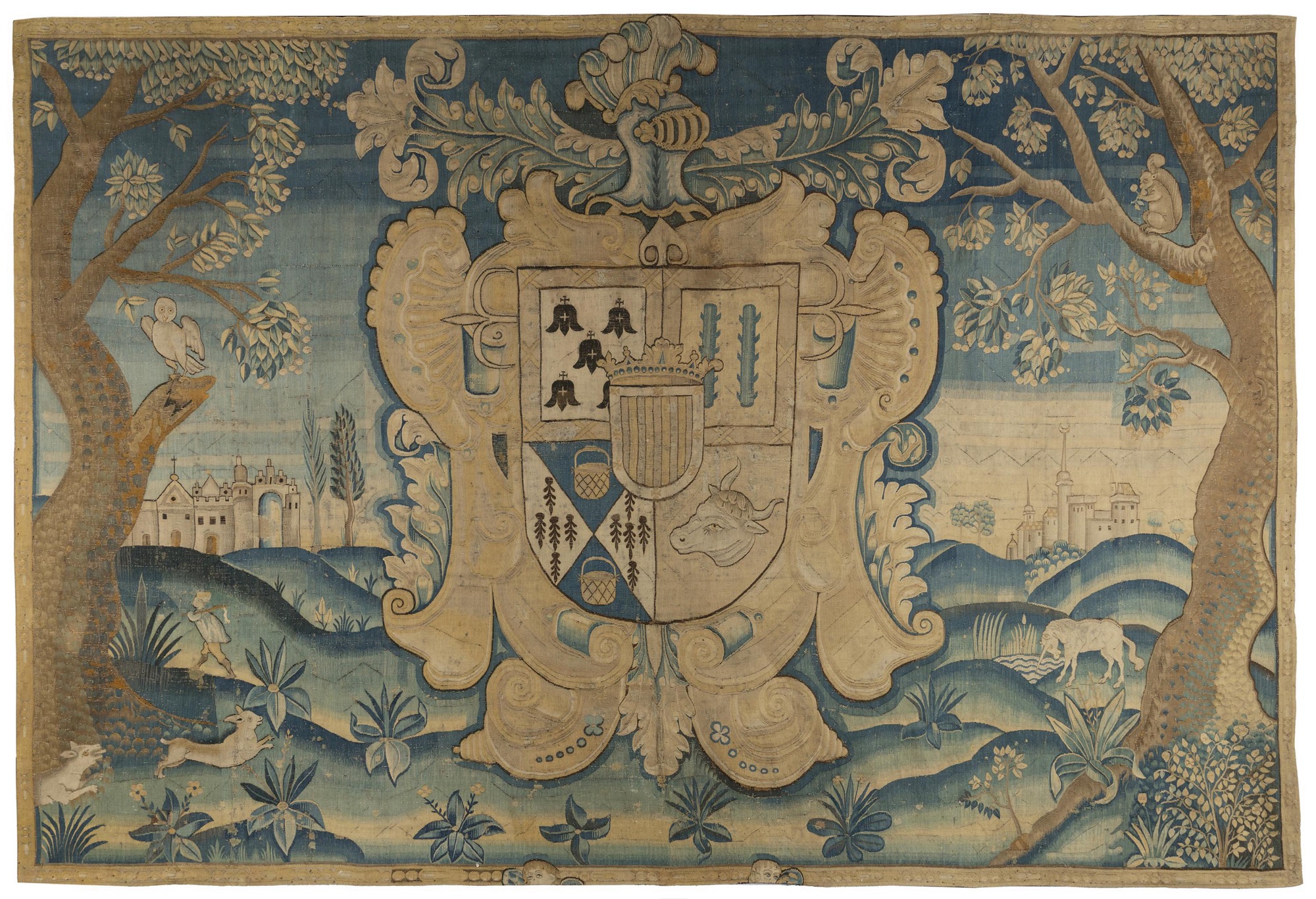
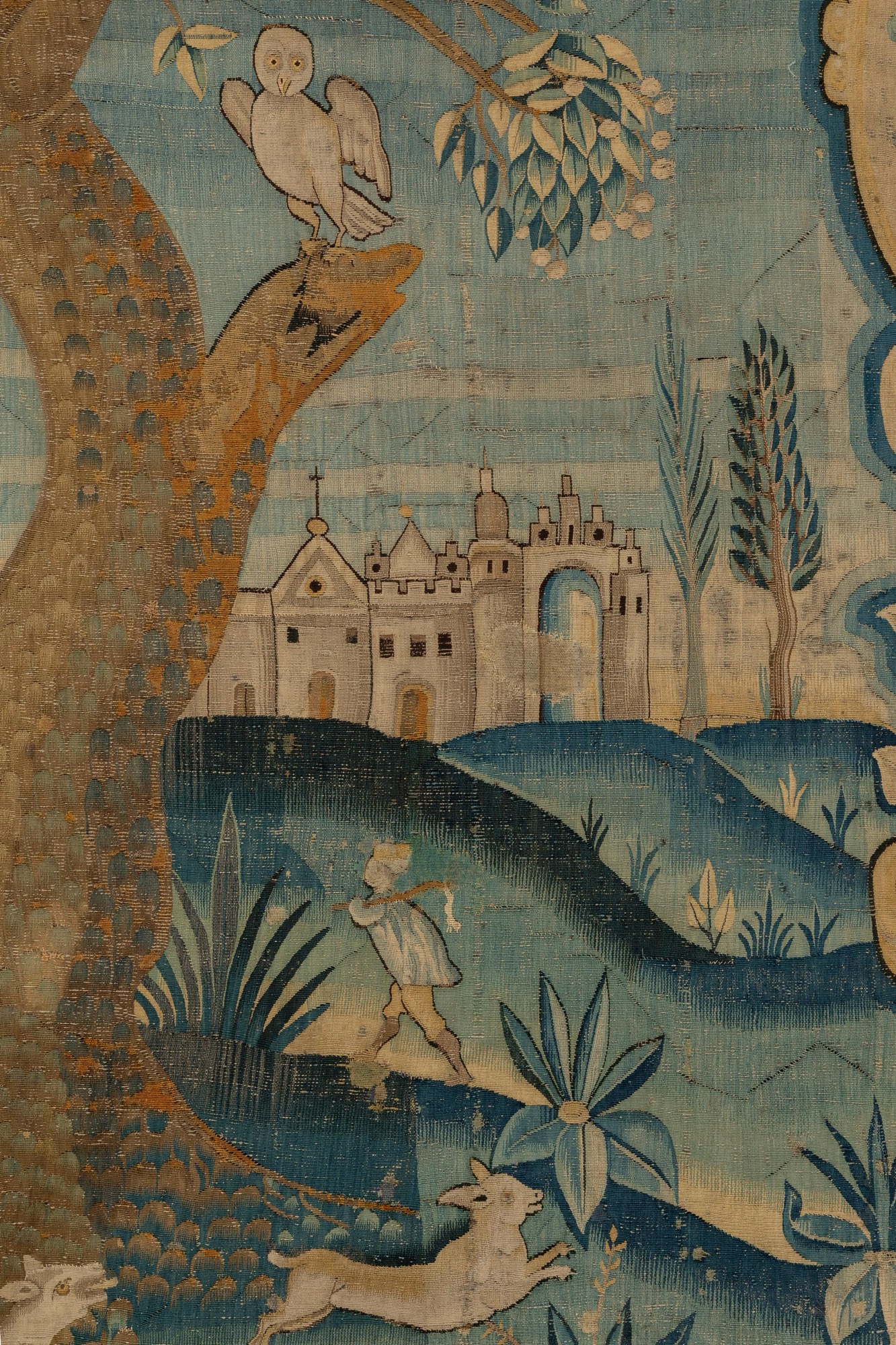
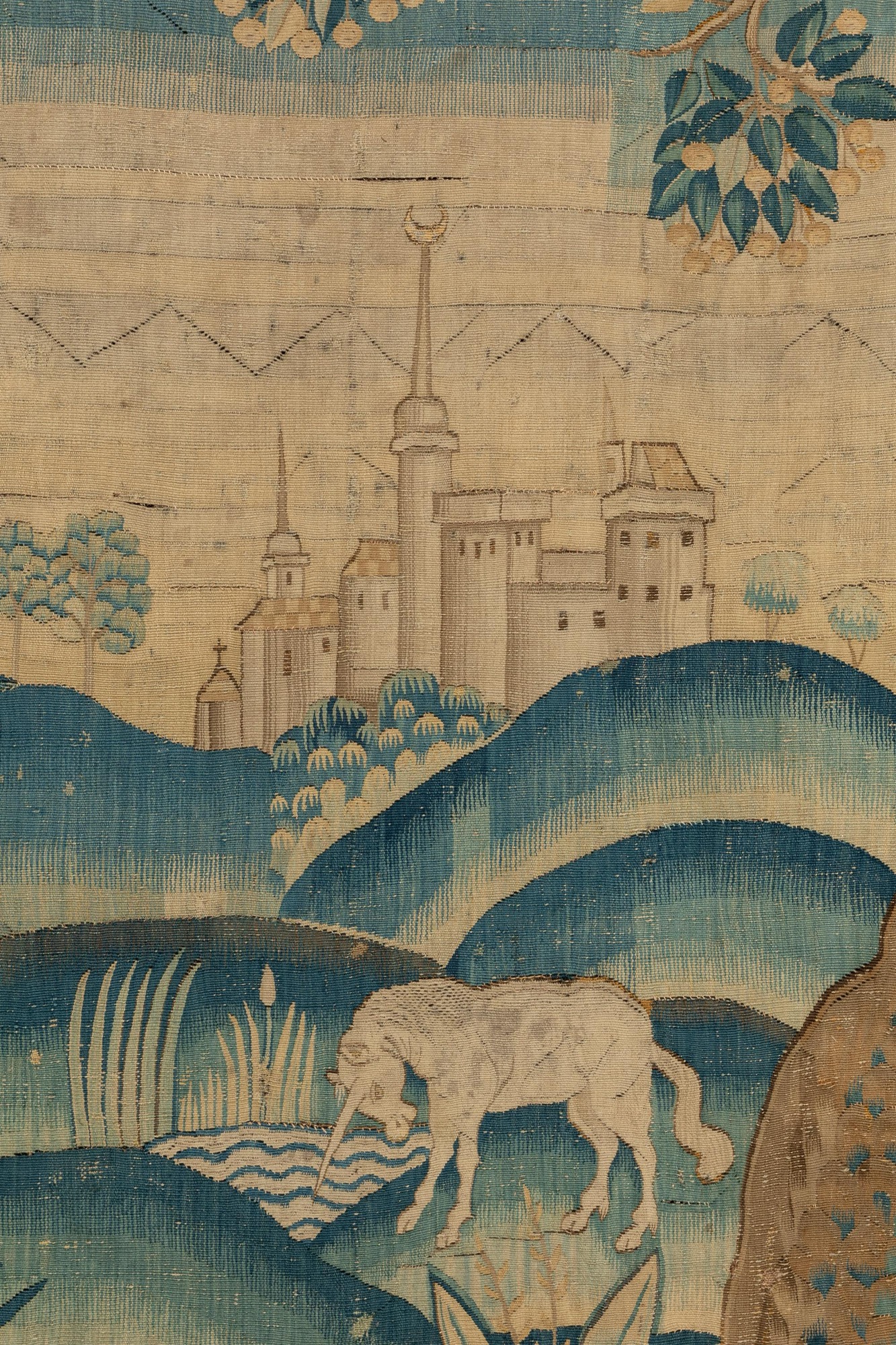
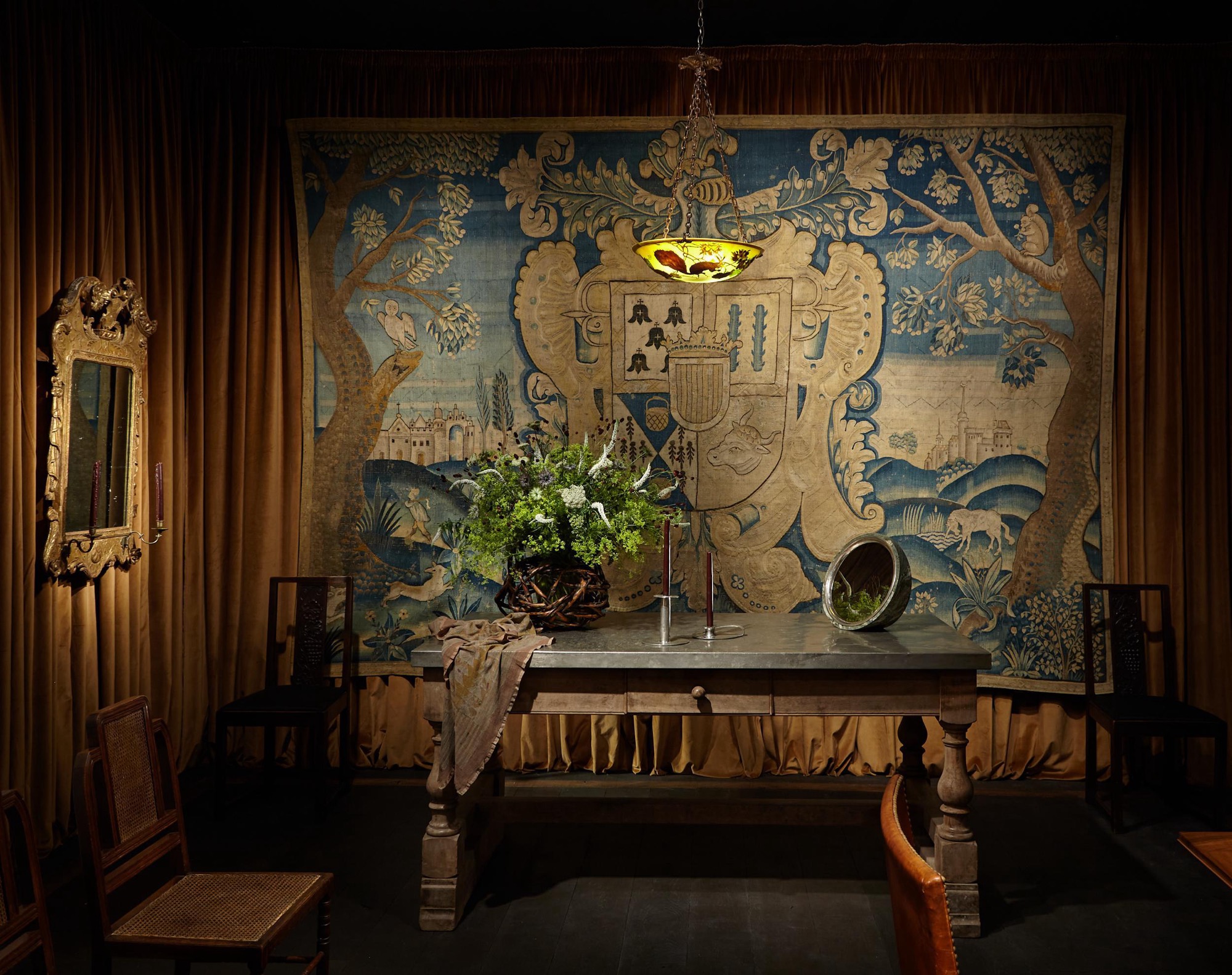
The tapestry, woven in wool and silk, is centred with a coat of arms surmounted by a barred helmet and broad acanthus mantling, flanked by trees with an owl and a squirrel among a rural landscape with a unicorn.
Probably Oudenaarde, circa 1600 for a noble Spanish patron
Provenance: A private Spanish collection
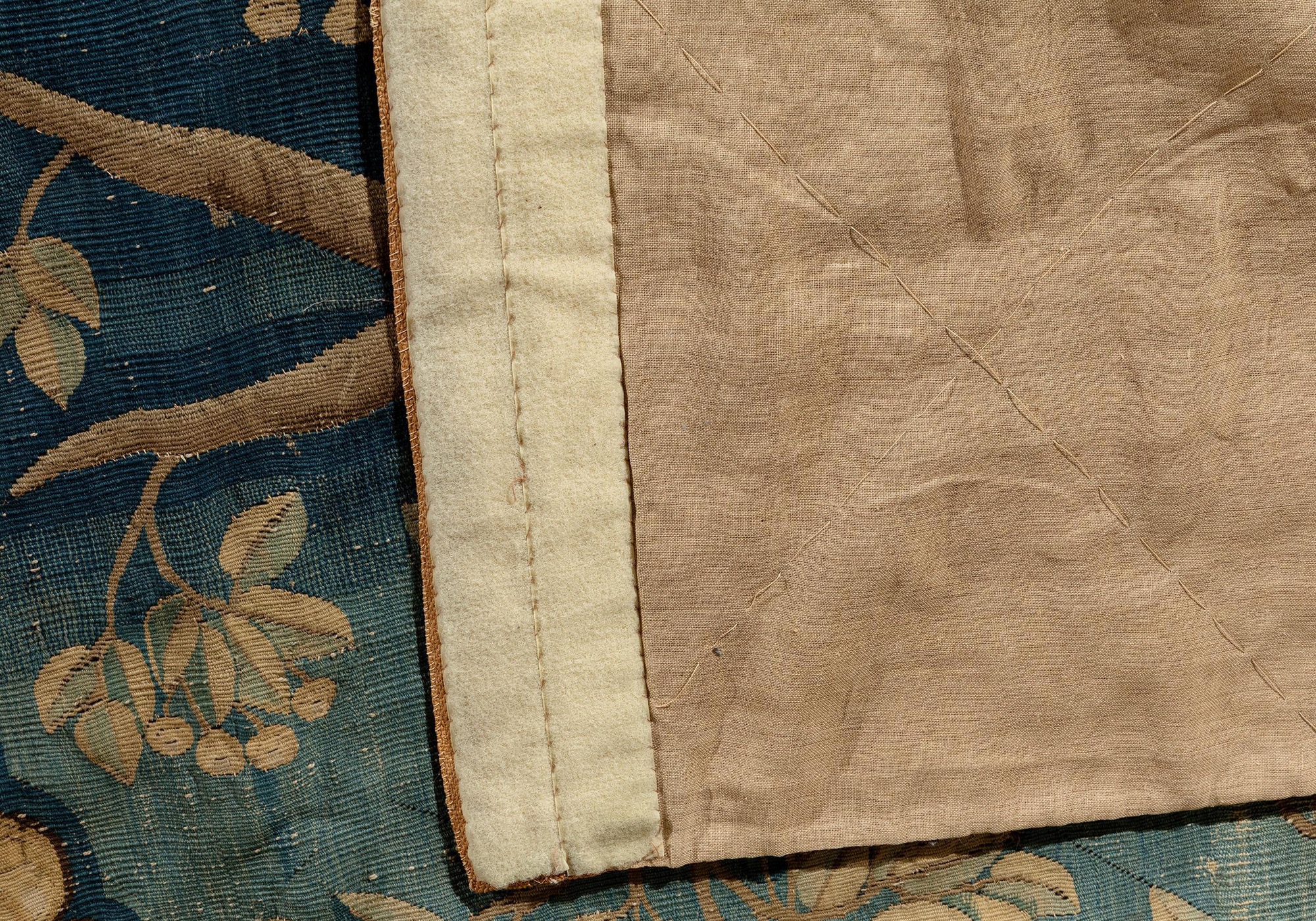
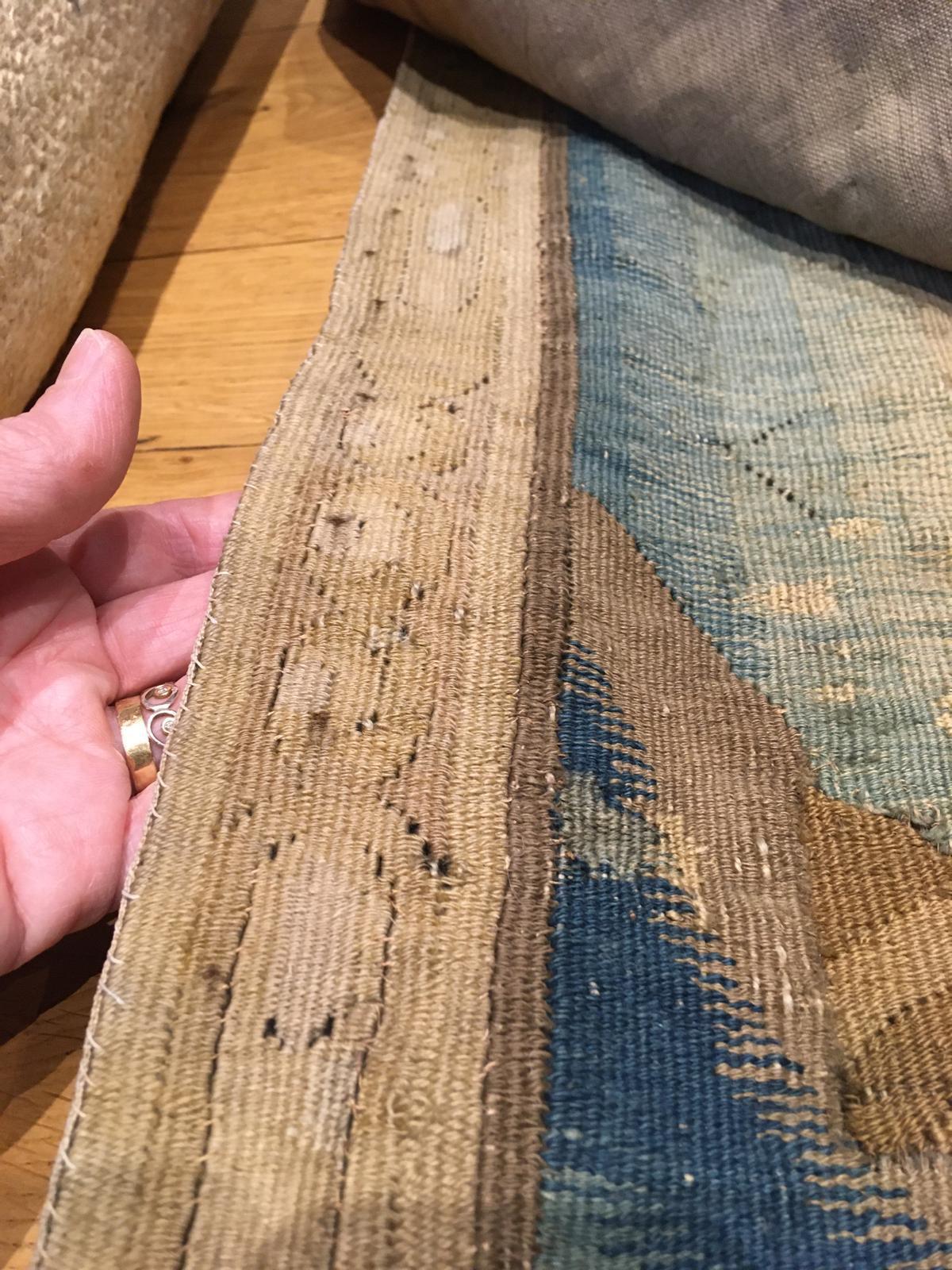
Condition: Areas of poor re-stitching have been removed and conserved with appropriate stitching. Some gaps to the tapestry where the stitching had come loose have been conserved. Re-backed at some point in the late 20th century. Velcro hanging strip stitched to the top back edge. The border reduced in size at some point. Fading to the colours consistent with age
Flemish workshops exported luxury textiles throughout the Habsburg world, especially to Spain, where these tapestries were considered among the highest expressions of aristocratic culture. Under Habsburg rule, political authority and artistic patronage were deeply interconnected. A noble family did not merely buy a tapestry for decoration; they commissioned one to project lineage, legitimacy, dynastic continuity, and participation in imperial culture.
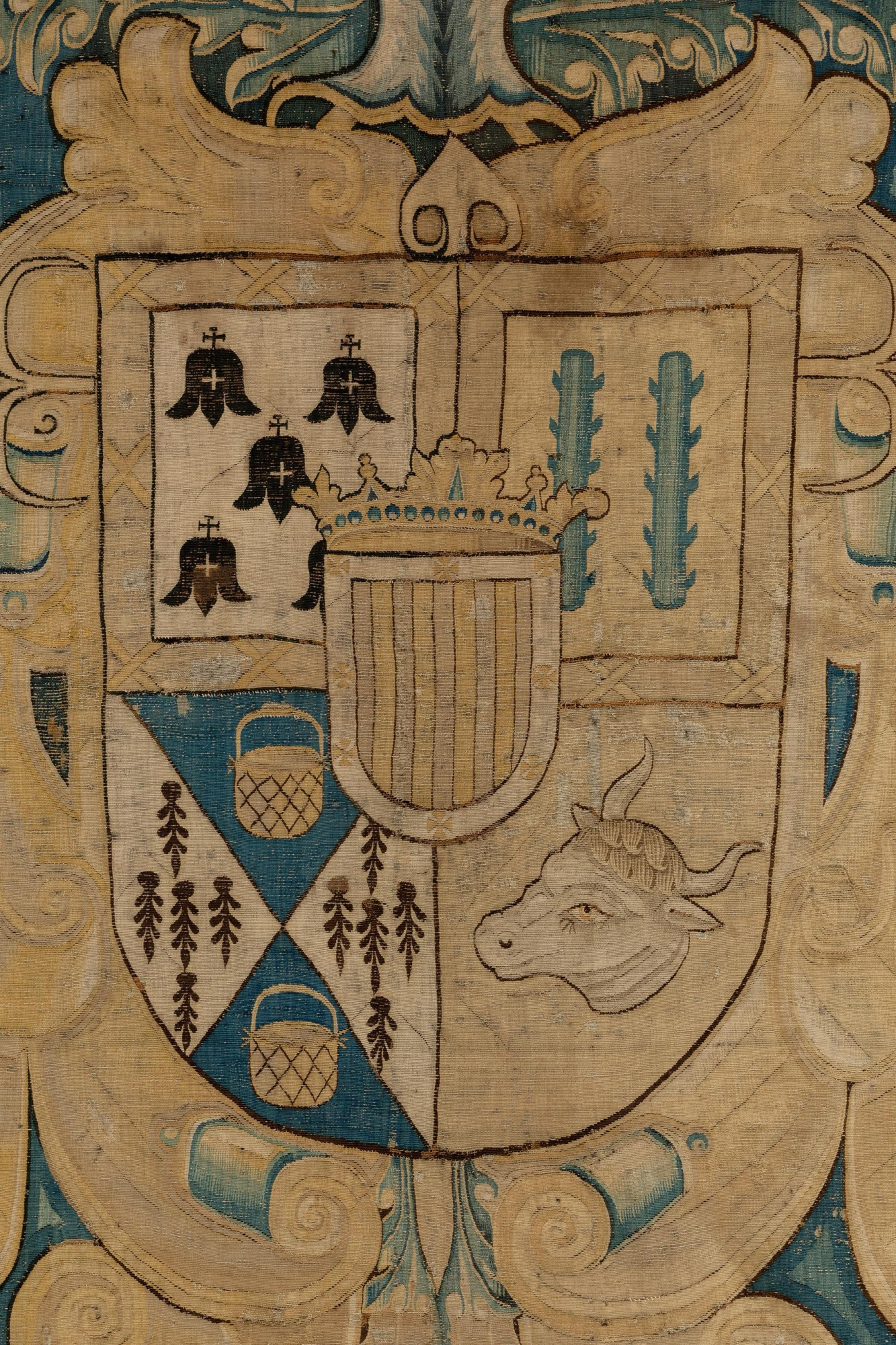
The workshops would interpret the charges (the symbols) of a coat of arms provided to them by the Spanish patron, often with an element of artistic licence. This makes conclusively attributing the coat of arms to any one family, or to multiple families, more complex. However, we can deduce that the coat of arms here most likely represents an alliance of noble Spanish families.
The quartered shield almost certainly represents multiple inherited family lines joined through marriage or dynastic consolidation. Heraldry of this kind was rarely random. Each quarter announced ancestry, legal claims, alliances, and social rank. The small central escutcheon likely emphasised the principal paternal line or dominant inherited title. In the political culture of Philip II's Spain, such displays mattered enormously because many families were in the process of transforming bureaucratic power into hereditary nobility.
The pastoral imagery surrounding the arms is also significant. In aristocratic iconography, hunt- ing landscapes symbolised dominion over land, cultivated leisure, and noble virtue. Such scenes projected the identity of a family whose authority extended beyond court office into territorial power.
In this tapestry, however, we see a suggestion in both the landscape and the coat of arms of an ecclesiastical influence aligning with a family rooted in Spanish nobility.
Dimensions:
RELATED ITEMS







 of a coat of arms provided to them by the Spanish patron, often with an element of artistic licence. This makes conclusively attributing the coat of arms to any one family, or to multiple families, more complex. However, we can deduce that the coat of arms here most likely represents an alliance of noble Spanish families.The quartered shield almost certainly represents multiple inherited family lines joined through marriage or dynastic consolidation. Heraldry of this kind was rarely random. Each quarter announced ancestry, legal claims, alliances, and social rank. The small central escutcheon likely emphasised the principal paternal line or dominant inherited title. In the political culture of Philip II's Spain, such displays mattered enormously because many families were in the process of transforming bureaucratic power into hereditary nobility.The pastoral imagery surrounding the arms is also significant. In aristocratic iconography, hunt- ing landscapes symbolised dominion over land, cultivated leisure, and noble virtue. Such scenes projected the identity of a family whose authority extended beyond court office into territorial power.In this tapestry, however, we see a suggestion in both the landscape and the coat of arms of an ecclesiastical influence aligning with a family rooted in Spanish nobility.)